
Tampa Bay's Commercial Real Estate Market Is Not Moving in One Direction
The Tampa Bay commercial real estate market in early 2026 is moving in different directions depending on the type of property. Some property types are very strong, others are still healing, and one is working through a “too much new supply” phase.
This report explains what is happening in simple terms so everyday investors, business owners, and local residents can understand what is going on across Tampa, St. Petersburg, Clearwater, Brandon, Lakeland, Sarasota, Bradenton, Wesley Chapel, Riverview, and nearby areas in Hillsborough, Pinellas, Pasco, Polk, and Manatee counties.
Key Terms Explained (Before We Dive In)
To keep this guide easy to follow, here are a few important terms in plain language:
- Commercial real estate (CRE): Property used for business, not for living in. Examples: office buildings, shopping centers, warehouses, and apartment communities.
- Leasing: When a business or person rents a space from a property owner and pays rent each month under a lease agreement.
- Vacancy rate: The percentage of space that is empty and not leased. Higher vacancy usually means weaker demand.
- Absorption: How much space is newly rented (or given back) over a period. Positive absorption = more space is being leased than vacated.
- Cap rate: A simple way investors estimate return on a property. It is the annual net income from a property divided by the price paid. A higher cap rate usually means higher risk and higher potential return.
- Net lease / NNN lease: A type of lease where the tenant pays base rent plus some or all of the property expenses like taxes, insurance, and maintenance. Common in industrial and retail.
- Property class (A, B, C):
- Class A: Newer, high-quality buildings in strong locations
- Class B: Older or less fancy but still functional
- Class C: Oldest or lowest quality buildings, often in weaker locations
- Tenant improvements: Upgrades or build-outs to the interior of a space so it works for the renter (for example, new walls, lighting, or break rooms).
Zoning: Local rules that say what types of buildings and uses are allowed on a specific piece of land (for example, industrial vs. office vs. retail).
Big Picture: A “Split” Tampa Bay CRE Market
In early 2026, Tampa Bay’s commercial real estate market looks like this:
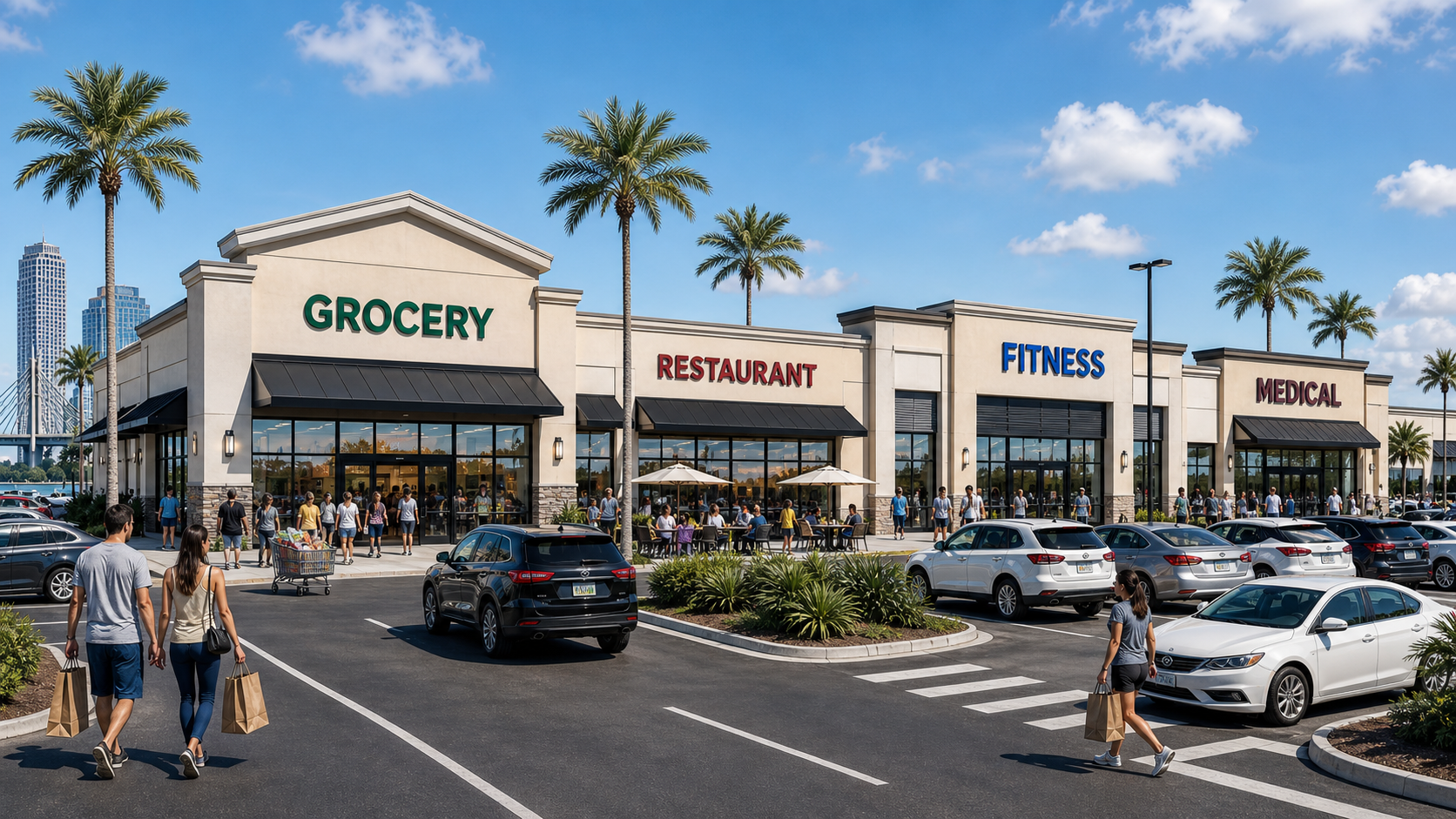
- Retail (shopping and service space) is very tight. Most good storefronts are full, especially in South Tampa, St. Petersburg, Wesley Chapel, and around growing suburbs.
- Small-bay industrial (smaller warehouses and flex spaces) is also tight. These are the 5,000–50,000 square foot spaces used by local service companies, trades, and light manufacturers.
- Office (business space) is slowly recovering. Some areas are still soft, but high-quality buildings in places like Downtown Tampa, Water Street, Westshore, and downtown St. Pete are seeing more leasing.
- Multifamily (apartment communities) is in a “supply correction.” Many new units delivered over the past few years, especially in Pasco County and Southeast Tampa, so vacancy is higher for now, but new construction is slowing down.
Population growth and business expansion are the main reasons Tampa Bay continues to attract investors. The broader metro is expected to add hundreds of thousands of people by 2030, which supports demand for all types of space over the long term.
Office: Recovery Focused on the Best Buildings
Office space means buildings where people work—law firms, tech companies, finance, healthcare services, and more.
Where the Office Market Stands
According to early 2026 data from the Tampa Bay Economic Development Council and major brokerage firms, office vacancy in the Tampa Bay market has improved compared to early 2025, dropping from around 21% to under 19% overall.
- Average asking rents for office space have ticked up to around the low–mid 30 dollar range per square foot per year for all classes combined.
- Westshore, Downtown Tampa, and Downtown St. Petersburg continue to be the strongest submarkets for top-tier “Class A” buildings.
“Flight to Quality” in Simple Terms
“Flight to quality” means tenants are trading older or lower-quality offices for nicer, more modern buildings that help attract employees and support hybrid work (part-time in office, part-time at home).
- Class A and trophy buildings in the core—like Water Street Tampa, top towers in Westshore, and premium buildings in downtown St. Petersburg—are capturing most of the new leasing.
- Many companies are taking slightly less space but upgrading the quality, which helps keep prime buildings full even if total square footage used is flat or slightly lower.
Suburban Flex: Small, Modern, and In Demand
Suburban flex-office properties—smaller spaces that can be used as office plus light industrial or storage—are gaining attention from growing tech, professional services, and medical-related businesses that want good space without downtown rents.
Areas like Brandon, North Tampa, Wesley Chapel, and parts of Pasco County are seeing stronger demand for these smaller, modern suites, especially when parking is easy and commute times are shorter than going downtown.
What’s Struggling
Older Class B and C buildings in out-of-the-way suburban spots are still facing high vacancy and pressure to cut rents.
Many of these may need:
- Heavy renovations (tenant improvements)
- New uses, such as medical office or education
- In some cases, eventual conversion to other property types if zoning allows
Office Investment View
Office cap rates in Tampa Bay are generally in the high-6% to low-7% range, depending on location and quality.
For investors, this means:
- Core, high-quality buildings in Westshore, Downtown Tampa, Water Street, and downtown St. Pete may offer more stable long-term demand.
- Older, commodity offices carry more risk but can offer “value-add” potential if bought at a discount and upgraded.
Retail: The Tightest and Most Competitive Sector
Retail space includes shopping centers, strip centers, restaurants, and service locations where businesses sell directly to customers.
Very Low Vacancy and Steady Rent Growth
Tampa Bay’s retail vacancy has stayed around the mid-3% range—very low by national standards—since about 2022.
- Average asking rents are in the high 20 dollar per square foot range and have been growing around 4–5% per year.
- There is very little speculative new construction, especially in core areas like South Tampa, St. Pete, and Clearwater.
This low vacancy is helped by strong population growth in suburbs like Wesley Chapel, Riverview, North Tampa, Lakeland, and parts of Manatee and Sarasota counties.
What Types of Retail Are Doing Best
- Experiential retail: gyms, fitness concepts, entertainment venues, and restaurants that people visit for activities and social experiences.
- Medical and wellness: urgent care, dental, physical therapy, and specialty clinics in retail-style centers.
- Grocery-anchored centers: shopping centers with a strong grocery store, plus daily needs tenants (coffee, quick-service food, pharmacies). These usually have the lowest vacancy and the highest sale prices per square foot.
Local Hot Spots to Watch
- South Tampa: Dale Mabry and Kennedy Boulevard corridors remain some of the most competitive, with very little quality space available and high tenant demand.
- Wesley Chapel and SR-54 / SR-56 corridor (Pasco County): Rapid household growth is drawing national brands, medical practices, and restaurants.
- Downtown St. Petersburg and the Tampa Riverwalk/Water Street area: Strong foot traffic from residents, workers, and tourists supports new retail concepts and dining.
Retail Investment and Cap Rates
Retail in Tampa Bay continues to see active sales:
- Transaction volume for retail has been strong, with hundreds of millions in sales per quarter in late 2025 and early 2026.
- Cap rates for well-located retail centers are in the mid-6% range, with lower cap rates (tighter pricing) for grocery-anchored centers in prime locations.
For investors looking for steady income and lower volatility, retail—especially grocery-anchored and daily-needs centers—remains one of the most attractive sectors in the metro.
Industrial: A Pause After a Building Boom
Industrial space includes warehouses, distribution centers, and manufacturing buildings. In Tampa Bay, much of this space lines up along the I-4 corridor (toward Lakeland), East Tampa, Brandon, and near the port and airport.
Vacancy Is Up from Record Lows but Still Healthy
After several years of record-tight industrial conditions and heavy new construction, vacancy has climbed but is now starting to stabilize.
- Overall industrial vacancy in Tampa Bay sits in the low–mid 7% range as of early 2026.
- Small-bay spaces (under about 50,000 square feet) remain very tight, with low vacancy and quick leasing.
- Average net asking rents are over 10 dollars per square foot per year for warehouse/distribution, higher for some manufacturing and flex spaces.
Why Vacancy Numbers Can Be Misleading
A lot of the vacancy is in:
- Older buildings (often 20–30+ years old)
- Properties without modern loading, clear heights, or truck circulation
At the same time, new, well-located Class A warehouses often lease quickly, sometimes before construction finishes.
Construction Pipeline Is Shrinking
The amount of industrial space under construction in Tampa Bay has dropped compared to 2024, with just over 1.2 million square feet under construction in Q1 2026, down from more than 2.5 million square feet in late 2024.
Key projects now underway include:
- South Tampa Trade Center
- Causeway Logistics Center
- Two Palms North & South
- Crossroads Industrial Center
Most are in South Tampa and Eastside logistics corridors, which benefit from access to I-75, I-4, and Port Tampa Bay.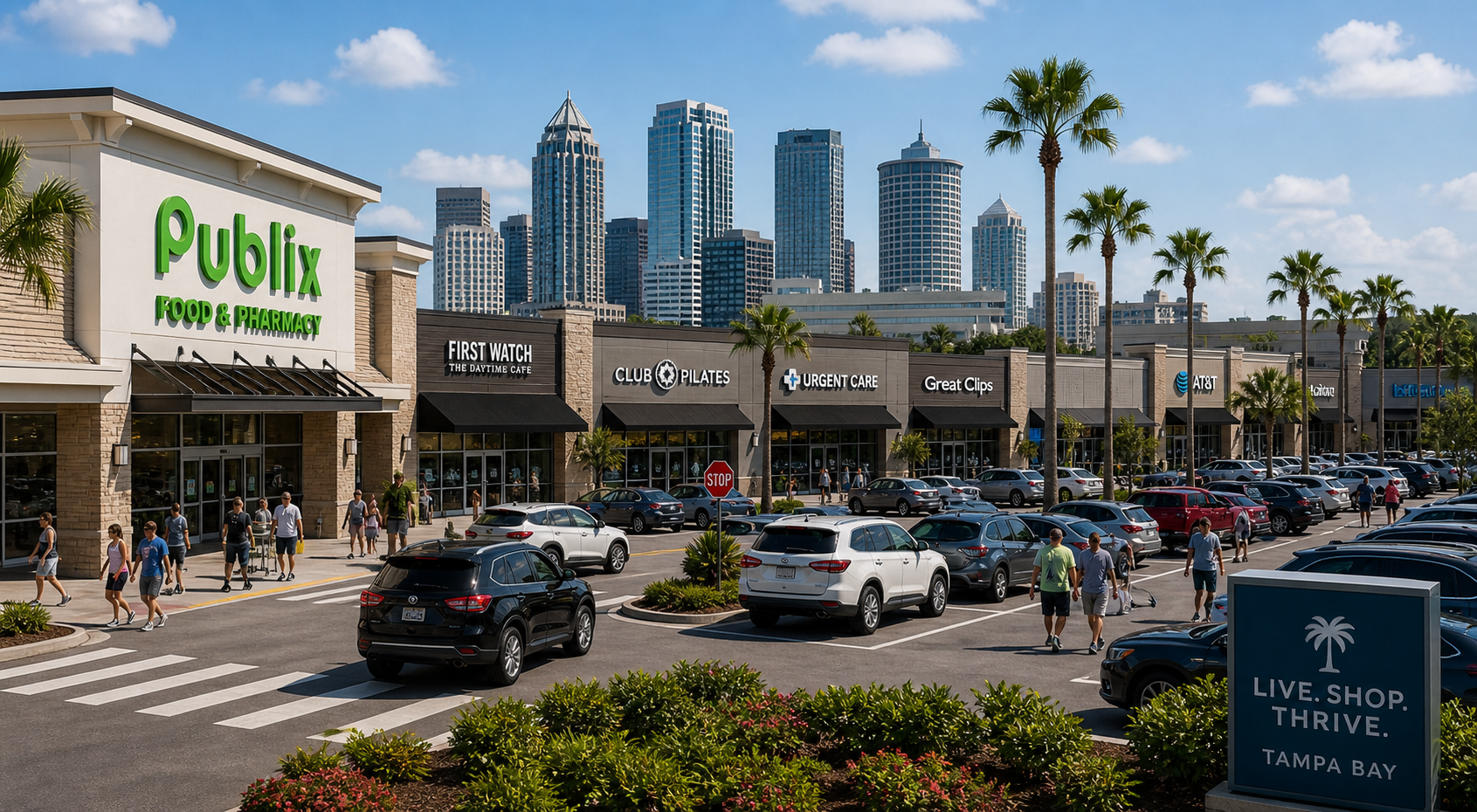
Demand Drivers
Leasing demand remains supported by:
- E-commerce and last-mile delivery
- Regional distribution to serve new housing growth in Pasco, Polk (Lakeland), and Manatee/Sarasota counties
- Logistics users like national retailers and home goods distributors
Rents Still Rising
Even with higher vacancy than a few years ago, rents continue to grow because:
- Tenants are willing to pay more for modern, functional buildings
- Older buildings often need upgrades or repositioning to compete
Industrial cap rates are currently in the mid–5% range and may compress (go slightly lower) if investor demand increases and interest rates eventually ease.
Multifamily: Lots of New Apartments, But a Reset Is Underway
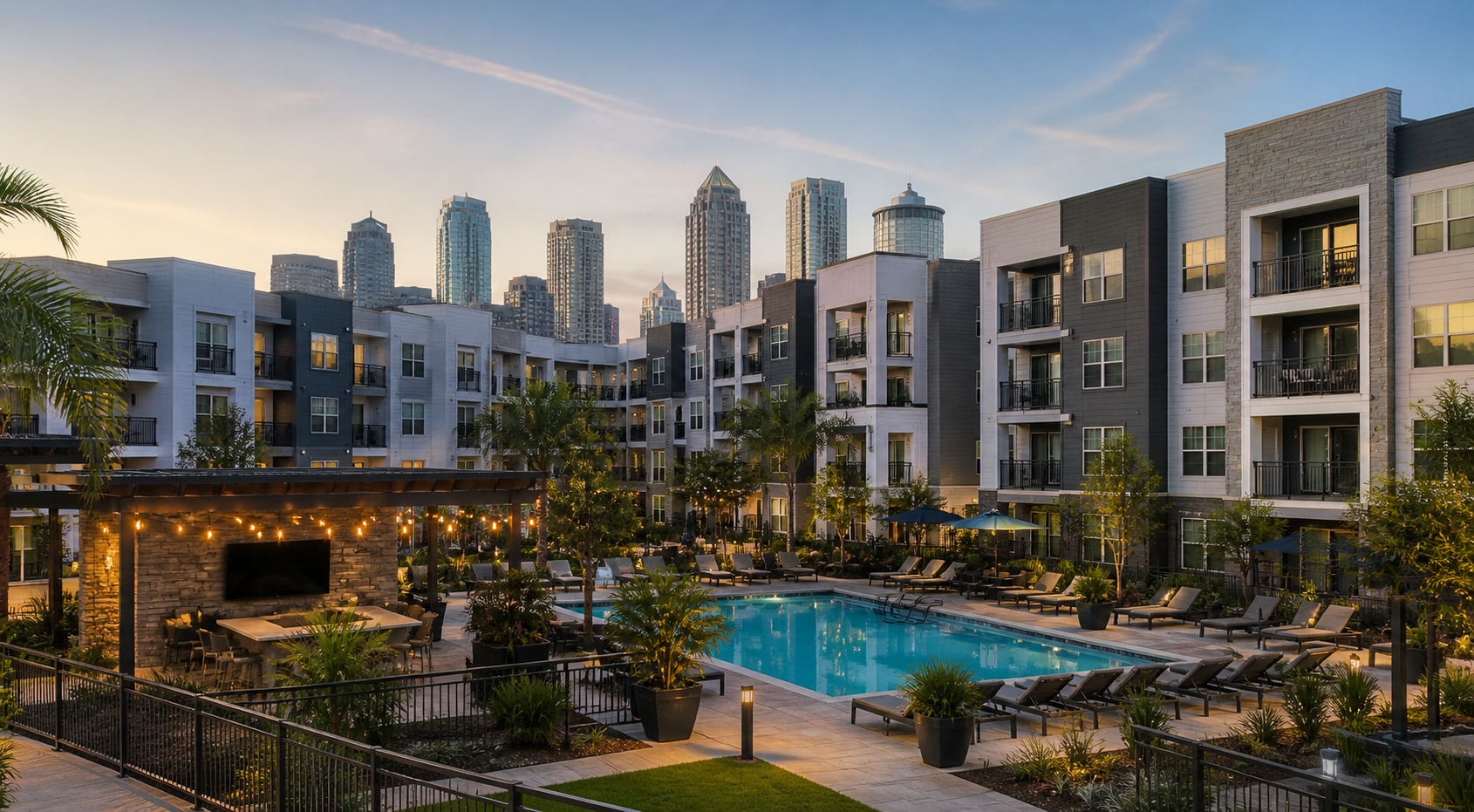
Multifamily refers to apartment communities and other rental housing with multiple units under one ownership.
Where the Apartment Market Stands
After several years of heavy building, especially in Pasco County (Wesley Chapel, Land O’ Lakes) and Southeast Tampa/Riverview, the Tampa Bay region is now dealing with higher vacancy and slower rent growth.
- Vacancy is hovering around 10% in early 2026—high for this region.
- Average asking rents are slightly lower than a year ago, around the high 1,700s per month for typical units, depending on location and quality.
- Units under construction have dropped sharply, from nearly 11,000 in late 2025 to fewer than 9,000 in early 2026, with even fewer starts expected going forward.
Supply Pipeline Is Cooling
New construction starts are at a five-year low, which means fewer new apartments will be delivered in 2027 and beyond.
- 2024 saw a very large number of new units delivered.
- 2026–2027 deliveries are expected to be much lower, which should help the market “catch up” as population growth continues, and existing vacancies are absorbed.
Submarkets Under the Most Pressure
- Pasco County and Southeast Tampa (including parts of Riverview and Brandon) have some of the highest vacancy rates because they received a big chunk of recent deliveries.
- Established areas like South Tampa, downtown St. Petersburg, and Westshore are holding up better due to stronger demand and limited new supply.
Investment View: Short-Term Pain, Long-Term Opportunity
For current owners, this period can feel difficult:
- More concessions (free rent or upgrades) to attract renters
- Slower rent growth or even slight declines in some submarkets
However, investors with a 3–5 year time horizon may see an opportunity:
- Pricing on high-quality assets has adjusted, often in the mid 200,000 dollar per unit range for newer Class A properties, depending on location.
- As the construction pipeline thins and population growth continues, vacancy should decline, and rent growth should return in late 2026–2027.
Cap rates for multifamily in Tampa Bay sit in the mid–5% range, with some premium locations trading tighter and more supply-heavy suburbs trading a bit higher.
Cap Rates, Investment Volume, and Tampa Bay vs. South Florida
Across major property types, cap rates in Tampa Bay have mostly stabilized in early 2026:
- Multifamily: Around 5.4%–5.8%
- Industrial: Around 5.5%–5.8%
- Retail: Around 6.3%–6.7%, lower for strong grocery-anchored centers
- Office: Around 6.8%–7.5%, with wide variation between trophy and older Class B/C
Tampa Bay often offers a yield premium of roughly 0.5–1.0 percentage points compared with similar properties in South Florida (Miami, Fort Lauderdale, West Palm Beach), which makes it attractive for investors looking for better returns per dollar invested.
Sales activity has started to pick back up after the interest-rate shock of 2023–2024, especially in retail and select industrial and multifamily deals.
Major Projects, Infrastructure, and Why They Matter
Several large projects and infrastructure investments are shaping the long-term outlook for the Tampa Bay market:
- Water Street Tampa (Phase 2): This mixed-use district near Downtown Tampa continues to add office, residential, hotel, and entertainment uses, supporting both office and retail demand.
- GasWorx in Ybor City: A large mixed-use redevelopment that will bring new housing, office, and retail to an emerging urban neighborhood, supporting long-term growth near the urban core.
- Tampa International Airport expansion: A multi-year plan adding new gates and capacity, which supports tourism, corporate travel, and related hotel and office demand.
- I-275 and regional highway improvements: Widening and interchange projects between Pinellas and Hillsborough counties improve access between St. Petersburg, Tampa, and northern suburbs, which can boost industrial, retail, and multifamily demand along these corridors.
 These investments help Tampa Bay compete with other fast-growing Sunbelt metros by improving connectivity, livability, and the overall business environment.
GPG Outlook for the Rest of 2026
Looking ahead to the rest of 2026, the big themes in the Tampa Bay commercial real estate market are:
- Office:
- Gradual improvement, especially in Class A and trophy assets in core submarkets like Westshore, Downtown Tampa, and downtown St. Pete.
- Expect vacancy to keep trending down slowly, with weaker performance in older, non-renovated buildings.
- Retail:
- Still the strongest, tightest sector.
- Vacancy likely to stay in the 3–4% range with continued rent growth above inflation in prime locations.
- Industrial:
- Early stabilization after a building boom.
- Small-bay and modern logistics buildings should perform best, especially along I-4, East Tampa, and Lakeland.
- As the construction pipeline continues to shrink, vacancy should begin to drift down again in late 2026–2027.
- Multifamily:
- Patience is needed.
- Supply pressure is high now but should ease as fewer projects start and deliver.
- Investors with longer hold periods may find attractive opportunities to buy below replacement cost in submarkets with limited new supply ahead.
For investors who want a broader overview of how to approach the Tampa Bay commercial real estate market, it can help to pair this quarterly update with a deeper educational guide like Gain Property Group’s main pillar article on investing in Tampa Bay commercial real estate. That type of resource explains strategies, risk, financing options, and different property types in more detail, and this Q1 2026 report gives the latest data to apply those ideas.
Related Reading
From Gain Property Group’s blog:
Helpful industry resources:
Subscribe to our newsletter to receive the next report and stay informed on Tampa Bay commercial real estate trends.
For a wider view of the market, read Investing in Tampa Bay Commercial Real Estate: The Complete Guide for Investors.